How wireless elevator video works
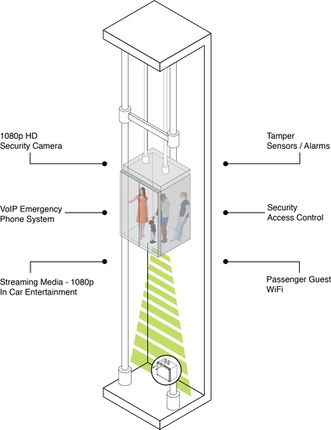
A wireless link replaces the cable that would normally carry video from the moving car. Your existing traveling cable stays exactly as it is.
1. Camera and transmitter on the car
An IP camera inside the car connects to a compact 5.8 GHz transmitter mounted on the car.
2. Receiver in the shaft
A matching receiver in the shaft holds a constant link with the transmitter, at any speed and height. Elevator motors and cables do not interfere.
3. Into your network
The receiver connects to your building network, so video reaches your recorder and security desk, and you can watch remotely on a phone, tablet or PC.
Wireless link vs new traveling cable
| Wireless link | New traveling cable | |
|---|---|---|
| Elevator downtime | Usually back in service the same day | Car out of service while cable is run |
| Cost | A fraction of the cost | Two to four times as much, by VideoComm's estimate |
| Tenant disruption | Minimal | Significant |
| Existing traveling cable | Stays as it is | Replaced or added to |
| Room to grow | Same link can add audio, access control and IoT | Each new service may need more cable |
What else the link can carry
- Two-way emergency audio and VoIP emergency phones
- Security access control
- HD displays and messages in the car
- Background music and recorded announcements
- IoT devices and sensors
Verify emergency calls before you dispatch
With live video from the car, your team can see what is happening the moment an emergency call comes in, which helps cut down on unnecessary fire department visits.
Tell us about your building
Share how many elevators and floors you have, and VideoComm's team will prepare a free quote, usually within one business day.